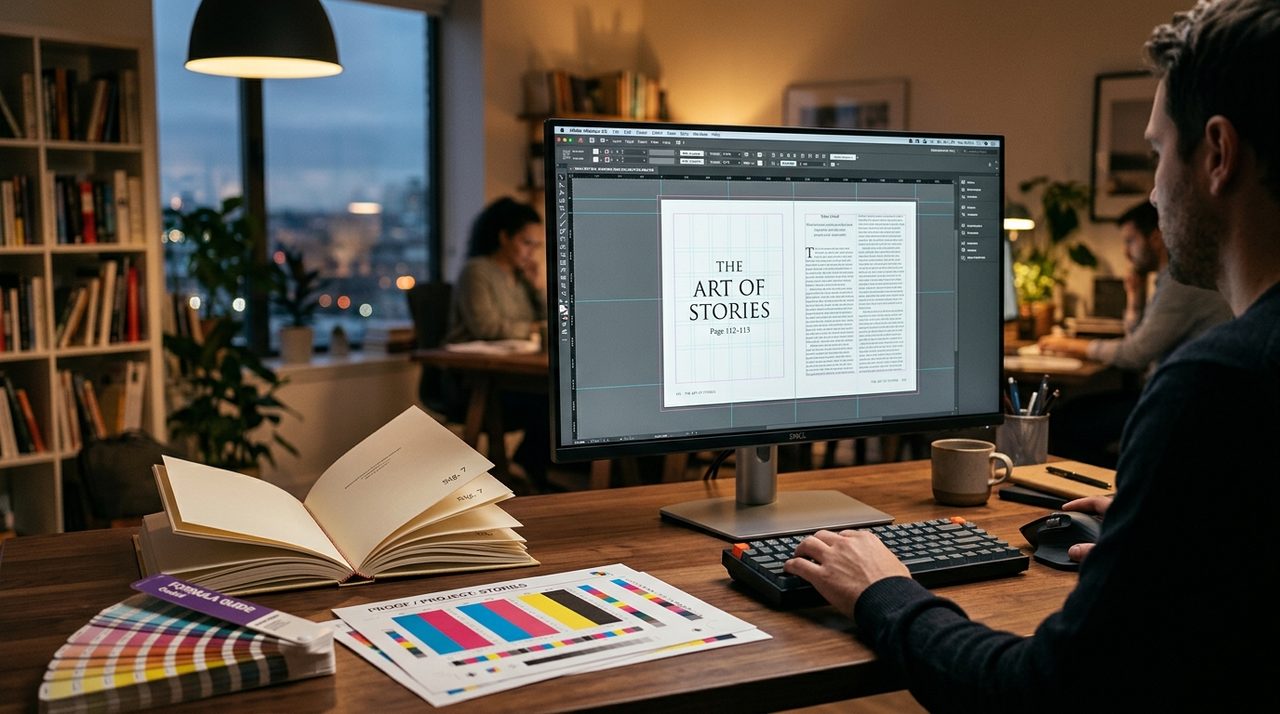
Grid Systems & Page Proportions: The Golden Canon & Van de Graaf Grid
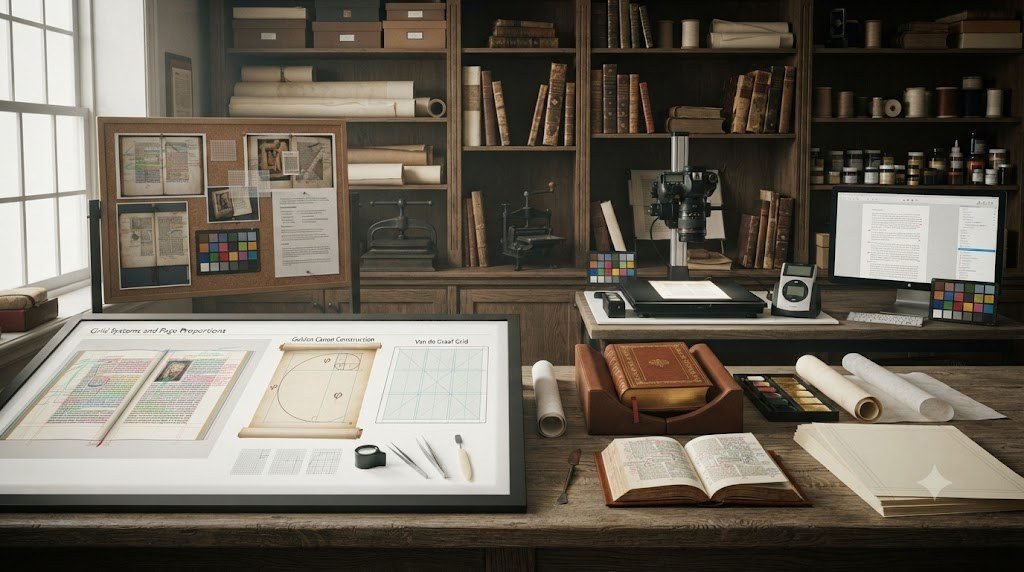
Long before modern desktop publishing software introduced arbitrary margin settings in inches and millimeters, medieval monastic scribes and Renaissance master printers constructed books according to rigorous geometric canons of proportion. In the mid-20th century, legendary typographer and book designer Jan Tschichold conducted forensic geometric analyses of early printed masterpieces—most notably the Gutenberg Bible and incunabula … Read more
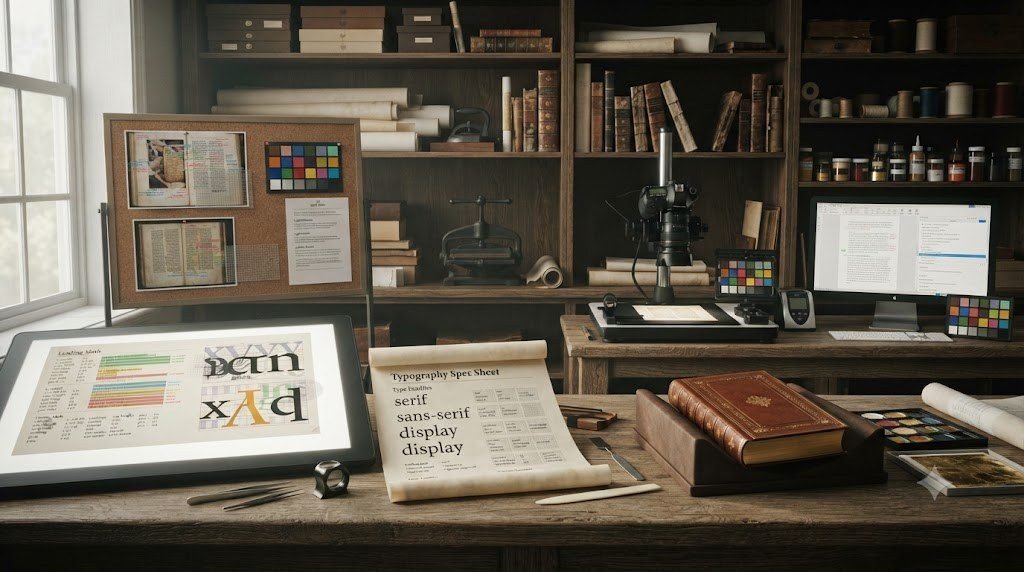
Book Interior Typography: Type Families, Microtypography & Leading Math

In the physical and digital architecture of a book, the interior typography is the invisible bridge connecting the author’s mind directly to the reader’s consciousness. When typography is executed with master craftsmanship, it becomes an invisible crystal goblet—holding the vintage of the author’s prose without distorting its color, flavor, or clarity. Conversely, poorly conceived interior … Read more

Proofreading Techniques: Errata Detection, Cold Reads & Galley Review

In the chronological lifecycle of book production, proofreading stands as the ultimate defensive bastion. It is the final quality assurance gate guarding the publisher’s reputation and author’s craft before thousands of physical copies are printed on commercial presses or pushed to global digital distribution platforms. In modern prepress publishing, proofreading is not casual reading for … Read more

Line Editing Mastery: Cadence, Syntax, Voice & Prose Rhythm Mechanics

While copyediting ensures that prose is mechanically and grammatically correct, line editing elevates prose from mere functional correctness into compelling, resonant literature. A manuscript can be 100% compliant with The Chicago Manual of Style—featuring impeccable commas and flawless spelling—yet remain completely flat, emotionally sterile, and tiring to read. The line editor works at the sentence … Read more

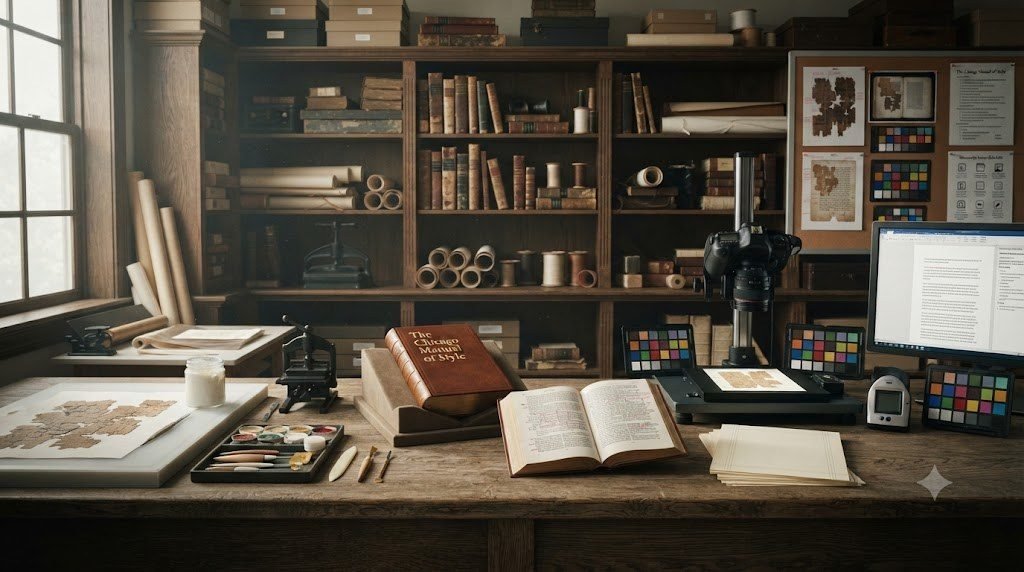
The Chicago Manual of Style (CMOS): The Definitive Editorial Bible

Within the professional publishing landscape of North America—and increasingly among international English-language literary publishers—one reference text commands undisputed, absolute authority: The Chicago Manual of Style (CMOS). First published in 1906 by the University of Chicago Press and now spanning over a thousand pages in its landmark 17th and 18th editions, CMOS is the indispensable bible … Read more

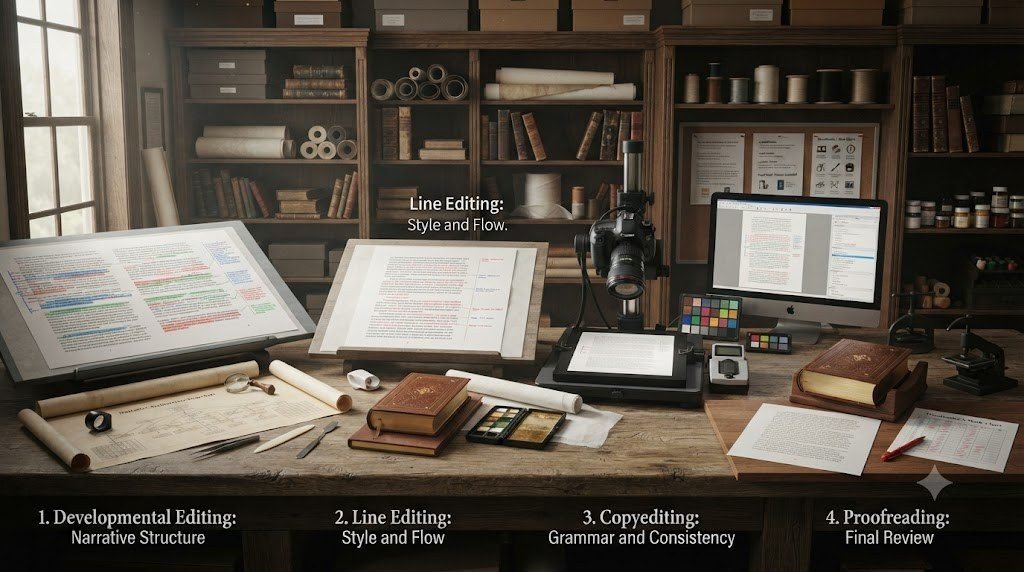
The Four Tiers of Editing: Developmental, Line, Copyediting & Proofreading

In professional trade publishing, university presses, and commercial self-publishing, the word ‘editing’ is frequently used as a broad umbrella term. However, publishing professionals recognize that editing is not a single uniform task, but a highly disciplined four-stage hierarchical pipeline. Each tier addresses a fundamentally different dimension of the manuscript, requiring distinct cognitive skills, editorial tools, … Read more

Author-Editor Collaboration & Version Control: Track Changes & Style Sheets

The transformation of an unpolished raw manuscript into an authoritative, market-ready volume is fundamentally an intensive collaborative human endeavor. The dynamic partnership between an author and their professional editor is one of the most creatively intimate relationships in the creative industries. However, without disciplined communication protocols, rigorous software version control, and standardized digital markup hygiene, … Read more

Developmental & Structural Manuscript Evaluation: Narrative Architecture

Before a literary work undergoes the granular sentence-level polishing of line editing or the grammatical mechanics of copyediting, it must be evaluated at the macroeconomic architectural tier: developmental editing (also termed structural or substantive editing). While line editors focus on syntax and copyeditors enforce spelling and style guides, the developmental editor functions as a master … Read more

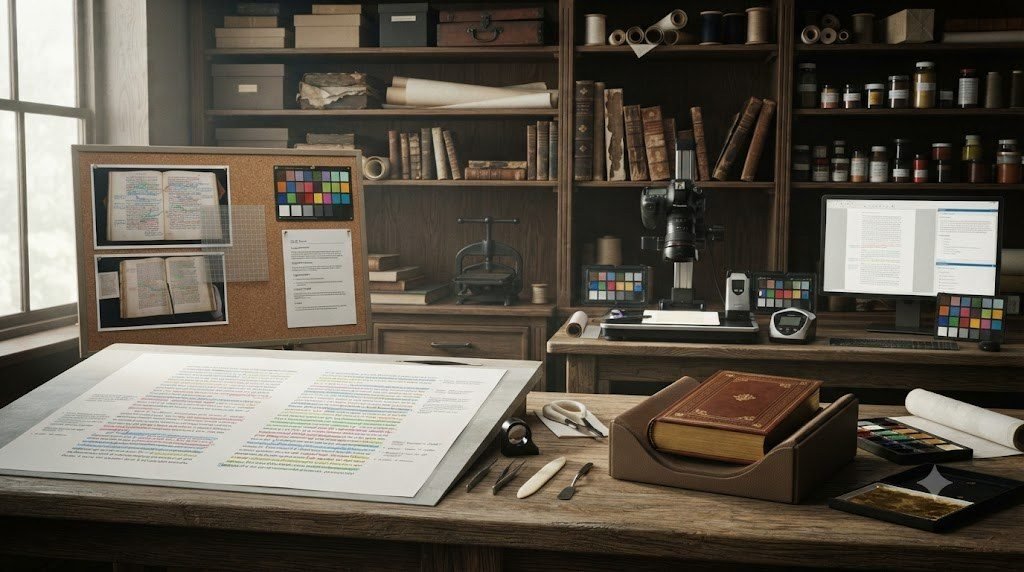
Textual Criticism & Paleography: Historical Archival Curation Standards

Before the invention of movable type printing by Johannes Gutenberg in mid-15th century Mainz, every book in human civilization was an individual, handcrafted, calligraphic manuscript. The survival, transmission, and scholarly interpretation of historical texts from classical antiquity, the medieval scriptorium, and early modern archives is governed by three rigorous bibliographical disciplines: paleography (the decipherment and … Read more

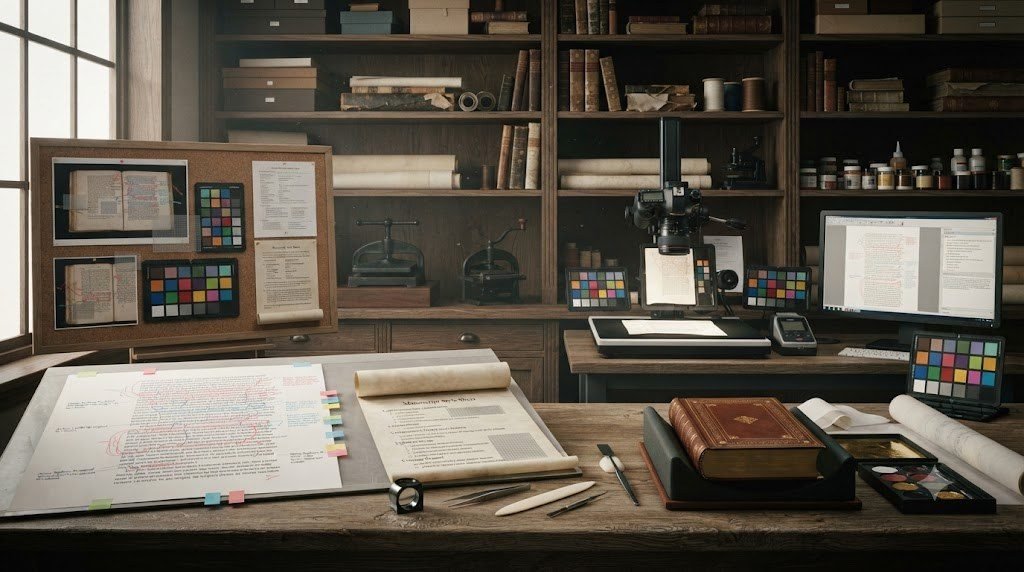
Manuscript Preparation & Formatting: Industry Standards for Submission

The journey of a literary or commercial book from an author’s private mind into the competitive global marketplace begins with the physical or digital artifact known as the manuscript. In trade publishing, university presses, and literary agency desks, manuscript formatting is far more than an arbitrary aesthetic preference: it is the universal professional handshake between … Read more

About BooksCraft

About BooksCraft

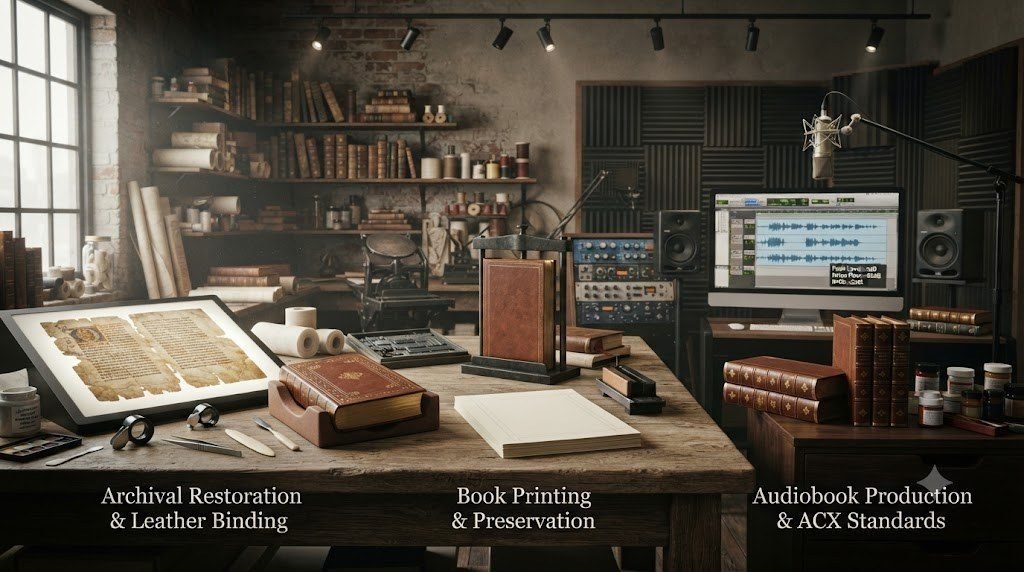
BooksCraft is a scholarly craft publication and editorial portal exploring the nuances of bookbinding, archival restoration, typographical layout grids, offset printing physics, and modern digital publishing methodologies.

Learn More →
Expert Research From verified domain specialists
Technical Guides Detailed workflows & empirical analysis
Verified Quality Always updated & peer-reviewed